










Fort Adams
Newport. Rhode Island
Fort Adams
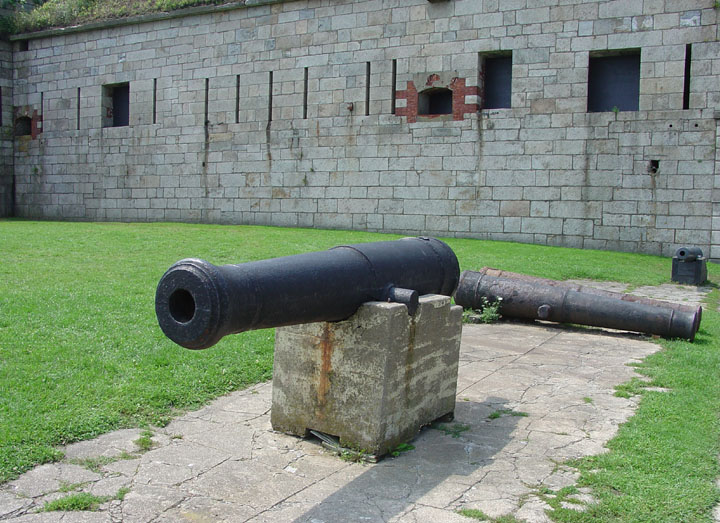
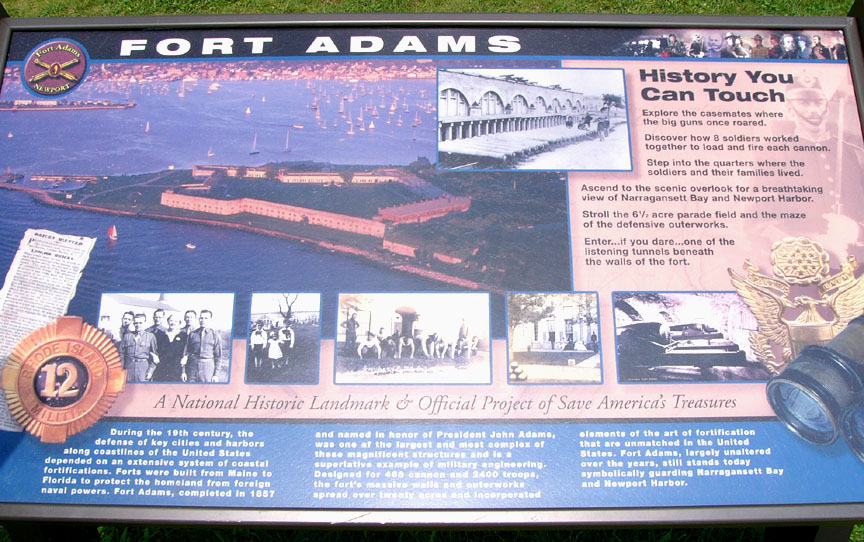
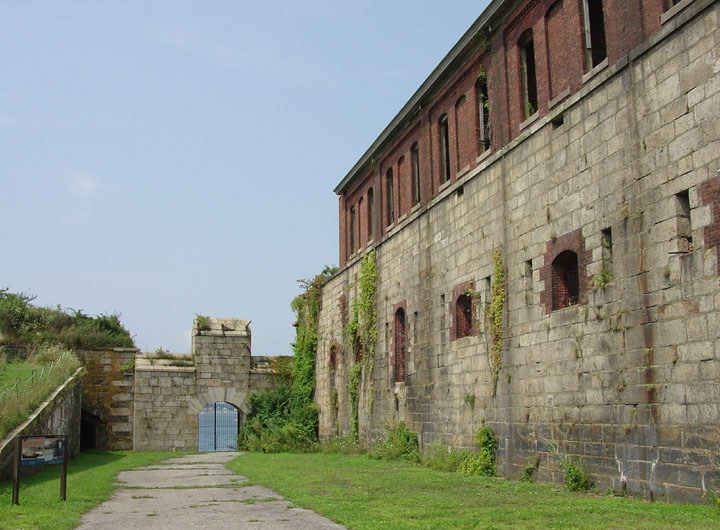
defended the Port of Newport, Rhode Island
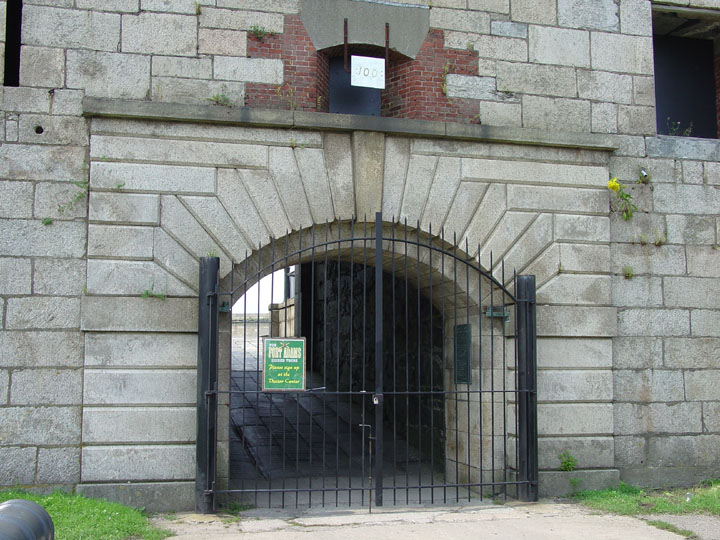
entrance
Construction of the Fort was begun
in 1824 and took nearly 30 years to complete. Irish immigrant stone masons
helped build it. The Fort was used by the U.S. Naval Academy during the Civil
War, reverting back to the Army when the Naval Academy moved to Pelham St. in
Newport. The Navy again took over the Fort in 1951....
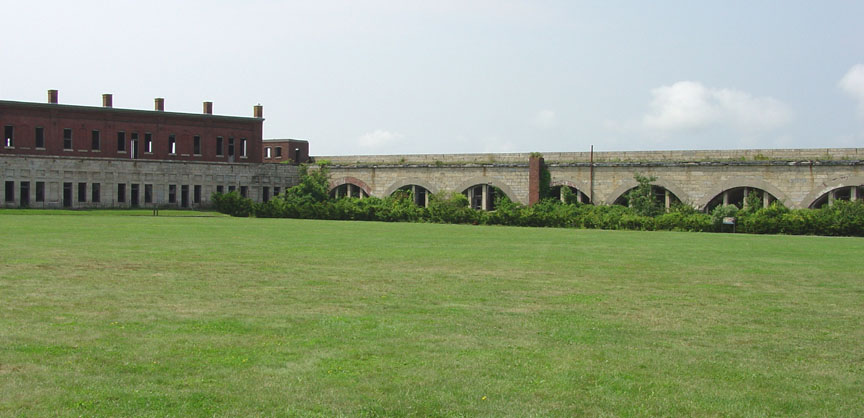
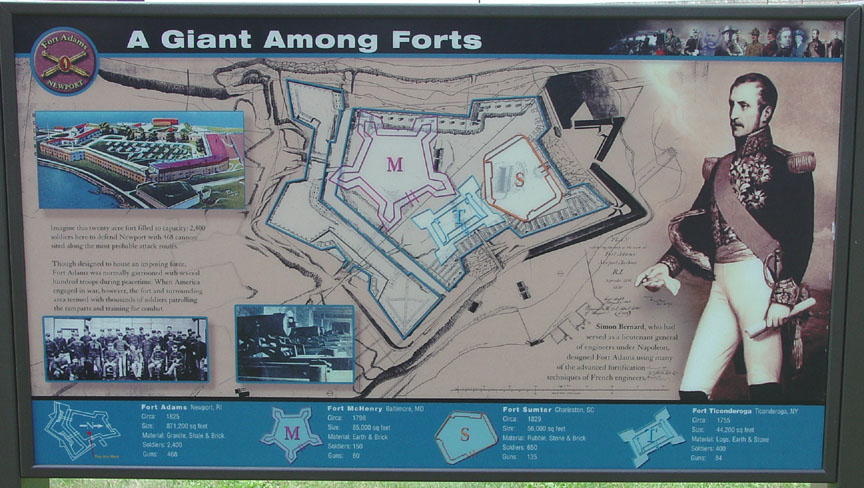
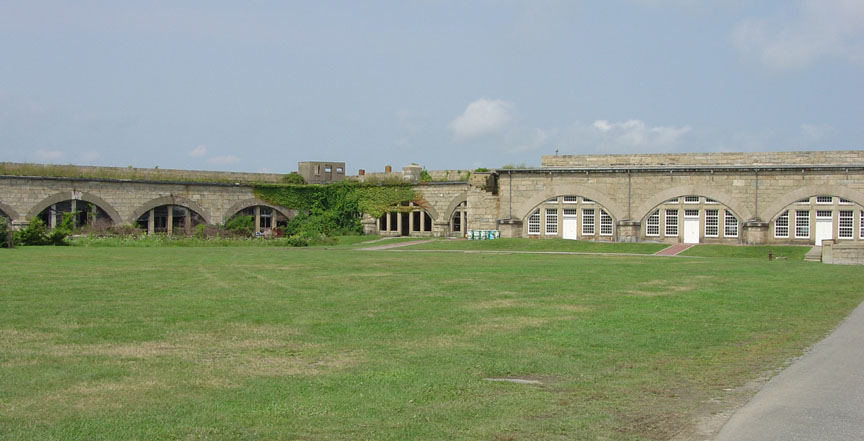
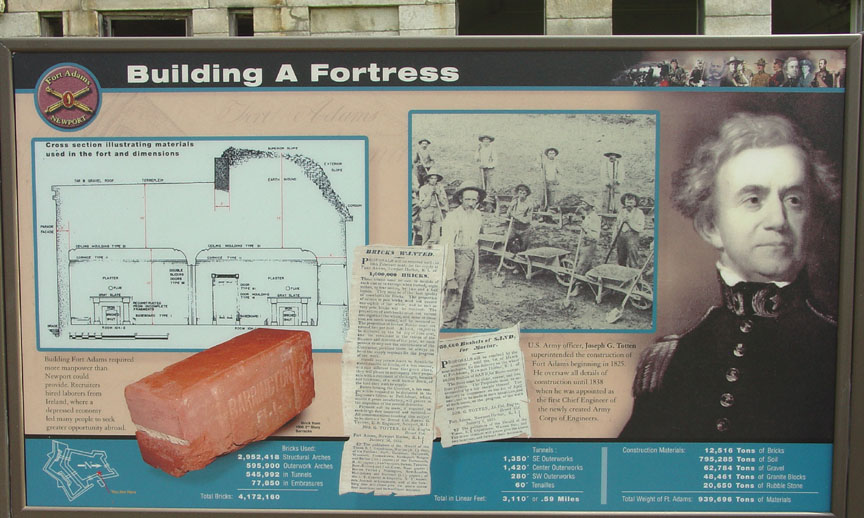
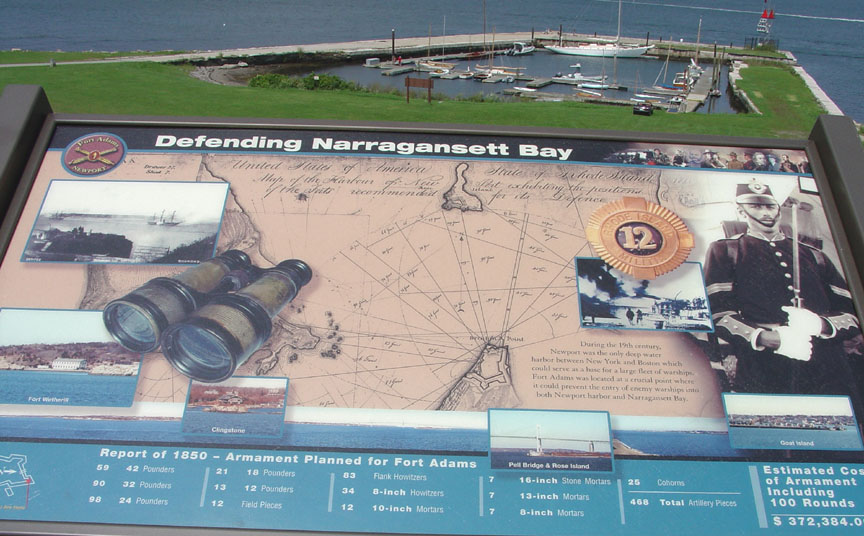
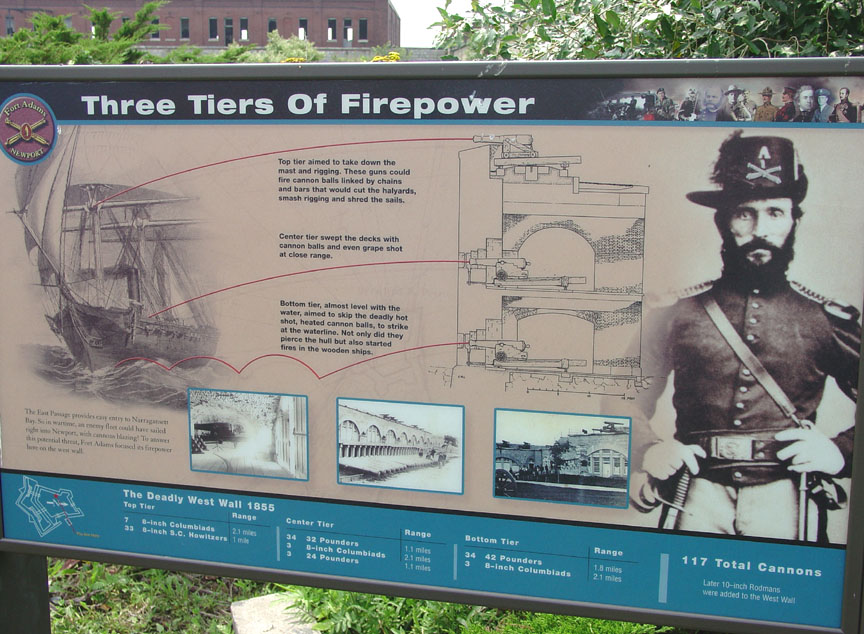
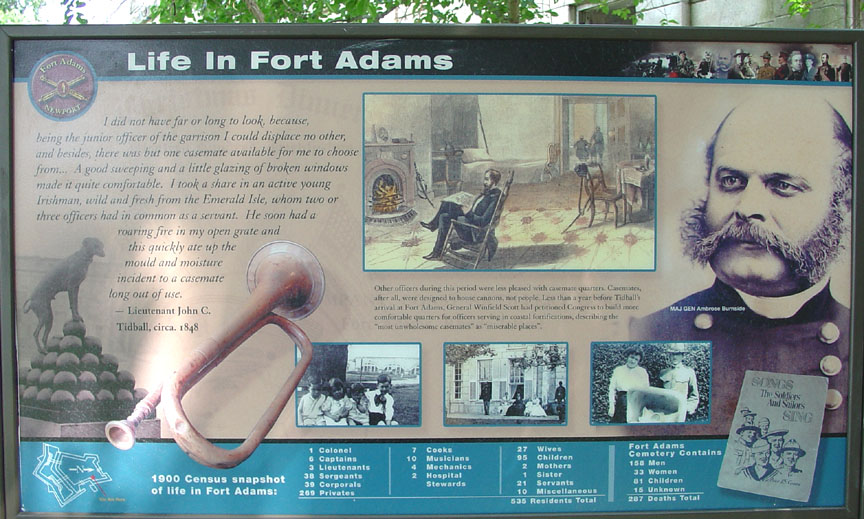
In 1841 the fort was nearing completion--most of the heavy work was done. To prepare for the mounting of cannons, Totten ordered superintending engineer Mason to lay the cannon platforms on the second tier of the west front. Shortly thereafter although the fort was yet incomplete, Lt. Mason must have been surprised to learn from an alarmed Col. Totten that two companies of artillery were to be ordered to garrison the fort.
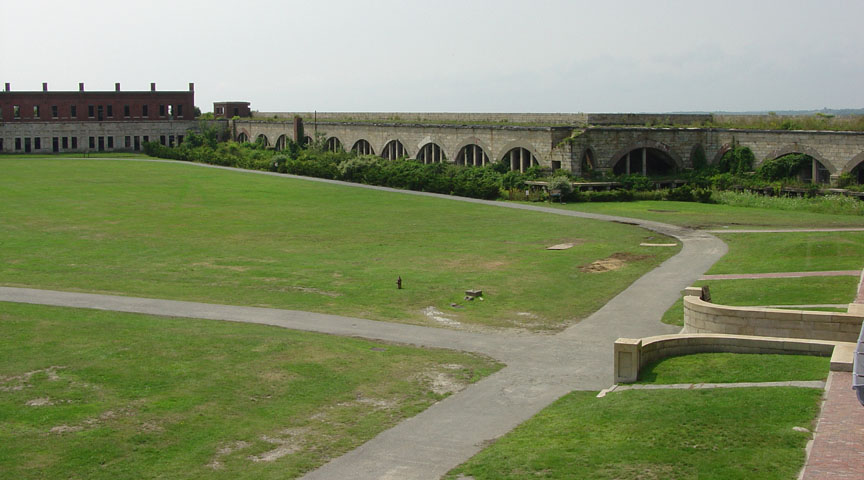
Immediately, Mason was directed to
finish the barrack casemates east of the southeast postern, the bakery,
storerooms, cisterns and rivies, all located in the southeast demibastion.
Operations included paving the floors in the long casemate containing the
privies with brick and covering these with boards, paving the areas around the
ovens, boiler, etc., with firebrick and the remainder of the floor in the
carronade gun rooms.
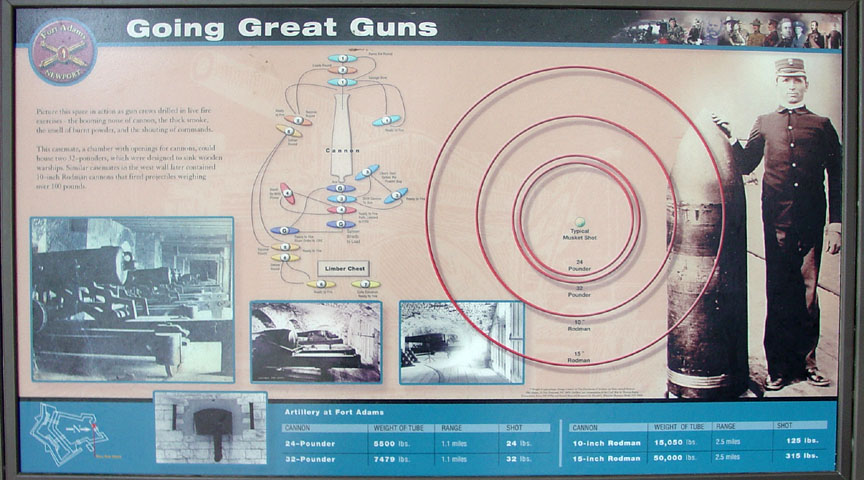
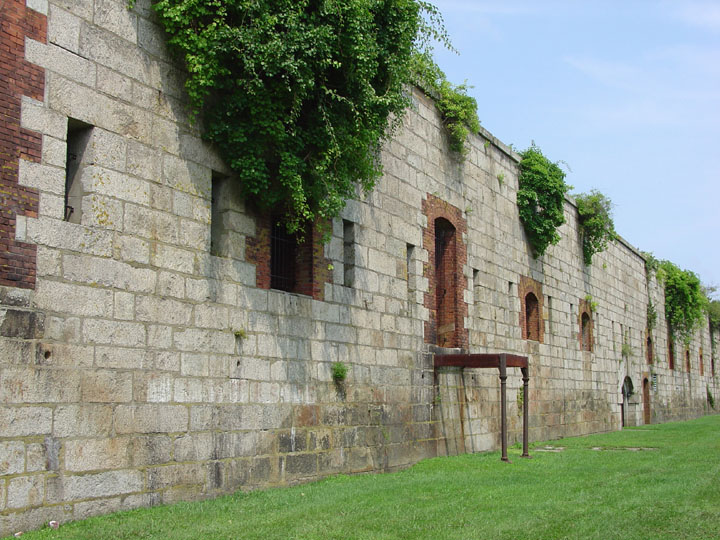
Men, armament and stores, the
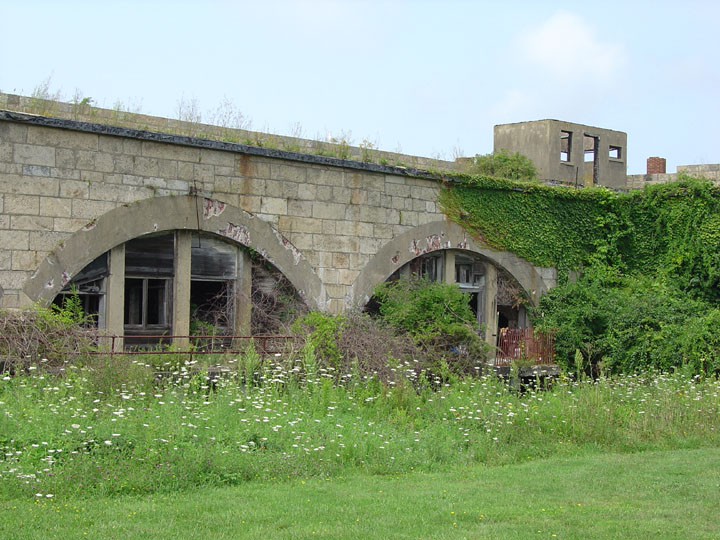
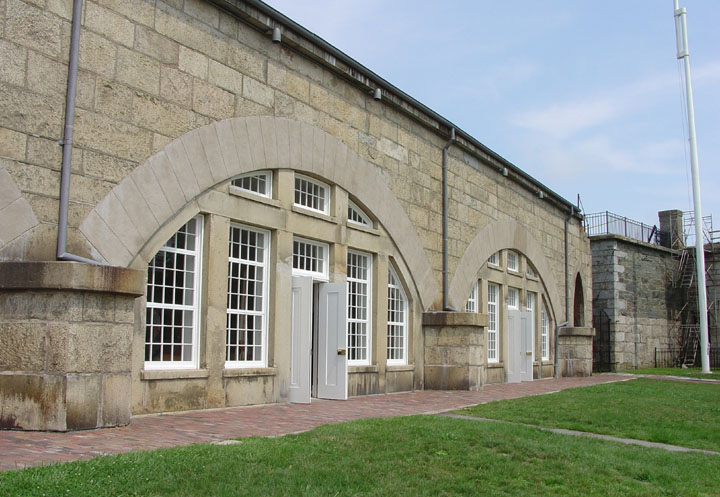
curtains and bastions contained casemates. At the time of completion, officers'
quarters were in the casemates of the east front; enlisted men were housed in
the casemates of the two interior fronts. Although the bombproof of the west
front were primarily for cannon, they were fitted with doors and windows--which
could have been removed rapidly--and were also used for quarters. The main
powder magazines were contained in three large casemates located in the
northeast bastion; these supplied service magazines located at convenient points
throughout the fortifications. Kitchen, food stores and mess halls were all
located in the southeast corner of the main body of the place.
Defending from Land Assault
the exterior ditch
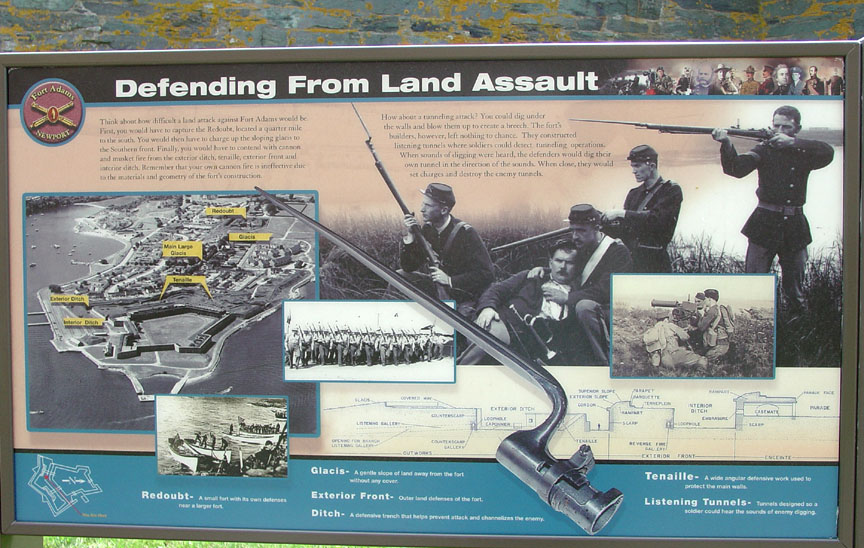
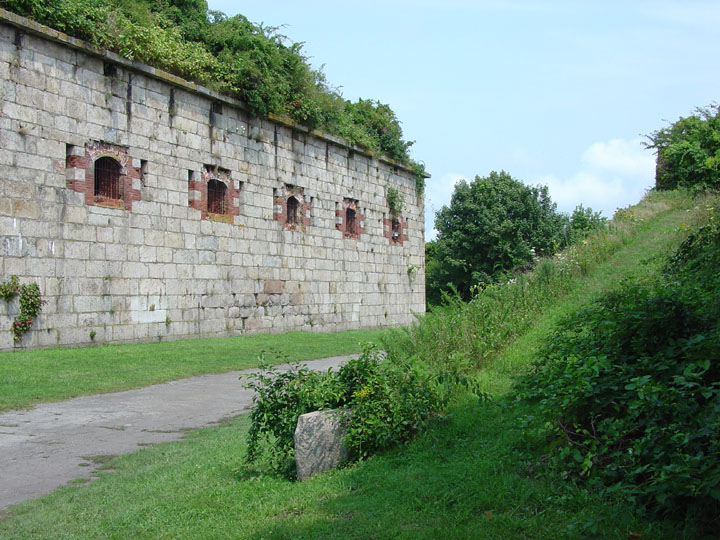
to detect possible enemy
approaching from land. or trying to tunnel under the massive walls, ls,
a series of "listening" tunnels were constructed in a gallery.
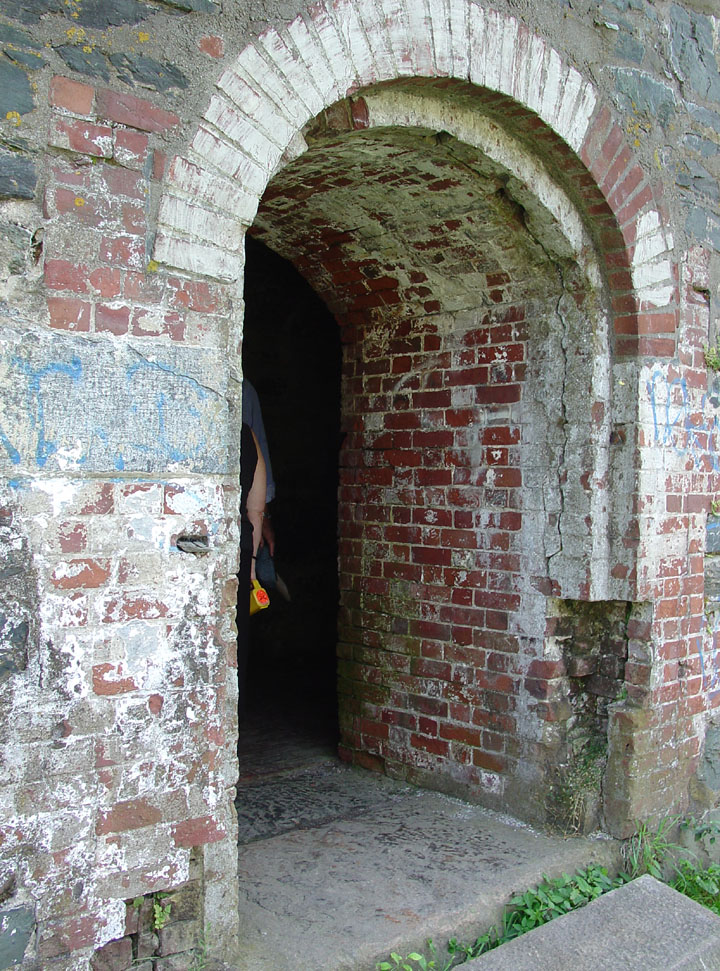
entrance to a listening tunnels
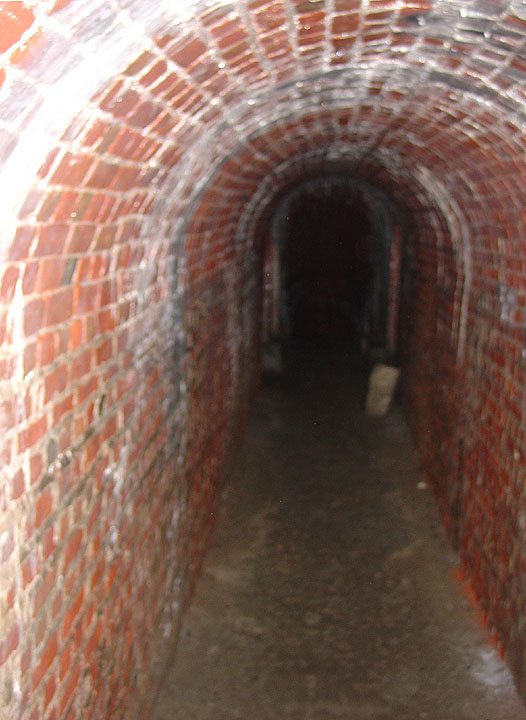
inside a listening tunnel
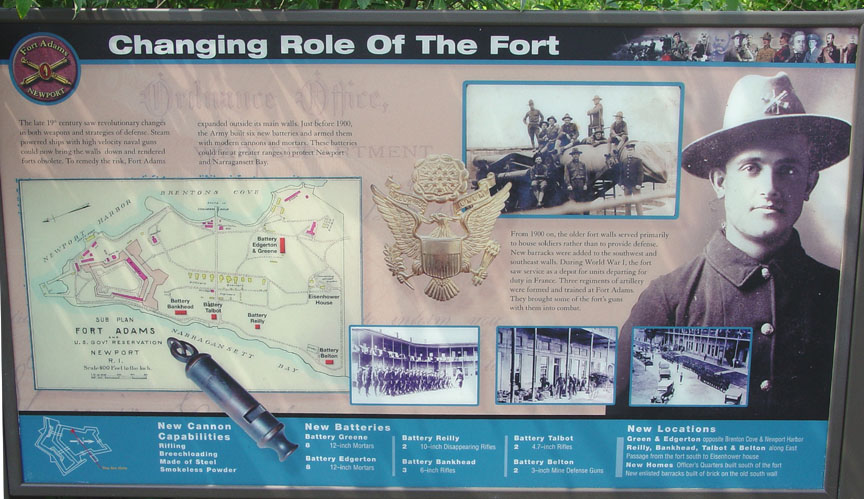
As is well known, none of these
fortifications was tested during the Civil War. During the war, all masonry
seacoast fortification became obsolete. It was demonstrated at Fort Pulaski and
other forts that brick and granite was incapable of resisting the impact of
missiles propelled from heavy rifled cannons. Thereafter, the history of Fort
Adams became a story of adaptation.
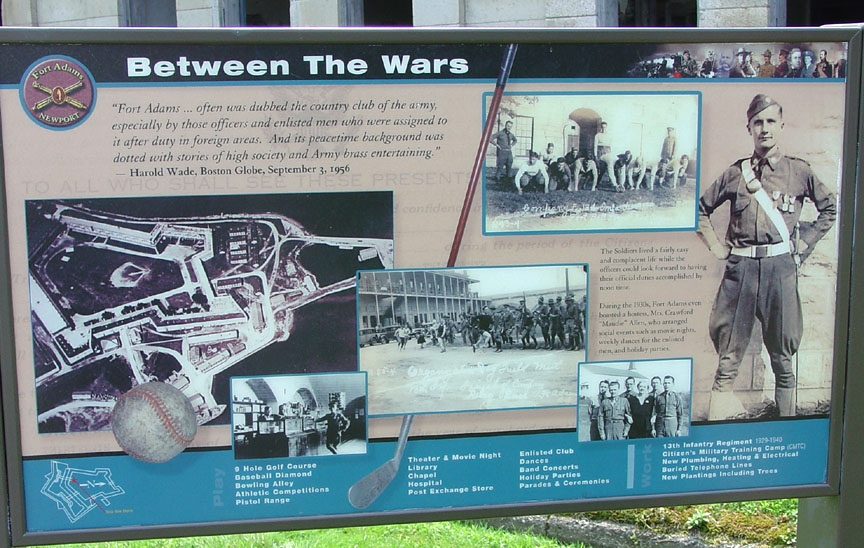
country club of the Army
After the turn of the century,
adaptive use continued at Fort Adams. Some casemates were used as music rooms;
others were converted for recreational use.
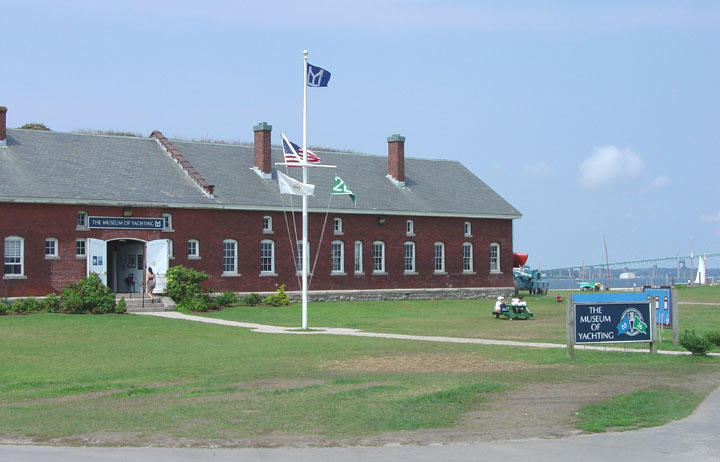
Museum of Yachting