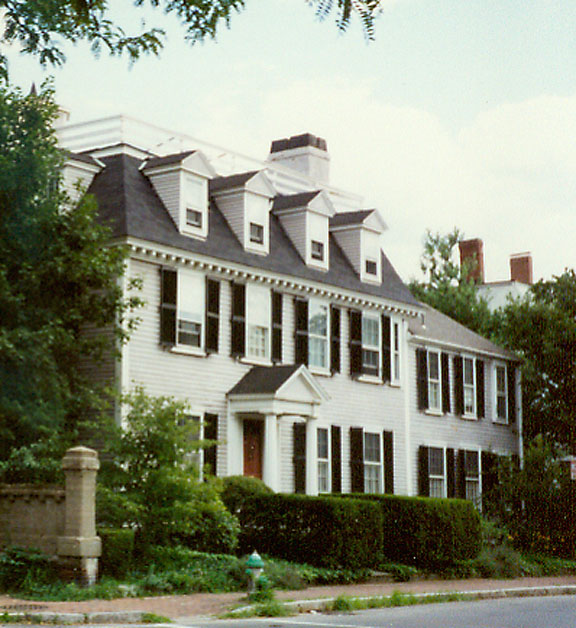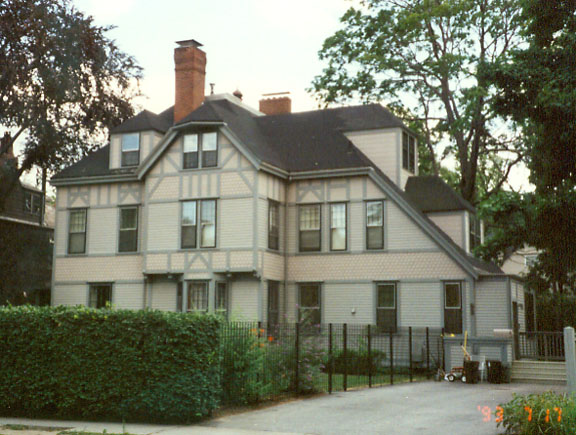








Lexington
Lexington was first settled circa 1642 as part of Cambridge, Massachusetts. What is now Lexington was first incorporated as a parish, called Cambridge Farms, in 1691, and was incorporated as a separate town in 1713. It was then that it got the name Lexington. How it received its name is the subject of some controversy. Some people believe that it was named in honor of Lord Lexington, a British nobleman. Some, on the other hand, believe that it was named after Lexington (which was pronounced and today spelled Laxton) in Nottinghamshire, England.
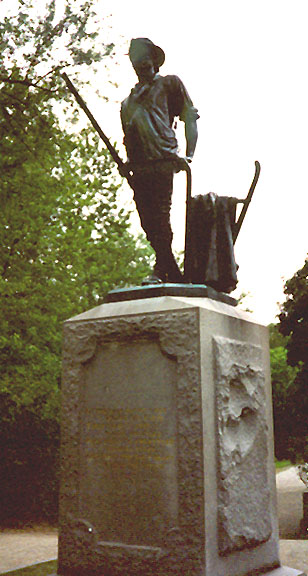
statue at the bridge in Concord
Minute Man National Historical Park
On April 19, 1775, Lexington was the location of the first battle of the American Revolutionary War. Every year, on the third Monday of April, the town observes Patriots' Day. Events begin with Paul Revere's Ride, with a special re-enactment of the Battles of Lexington and Concord. At 6 a.m., there is a re-enactment of the skirmish on the Battle Green, with shots fired from the Battle Green and the nearby Buckman Tavern (to account for the fact that no one knows from where the first shot was fired, or by whom). After the rout, the British march on toward Concord. The battle in Lexington allowed the Concord militia time to organize at the Old North Bridge, where they were able to turn back the British and prevent them from capturing and destroying the militia's arms stores.
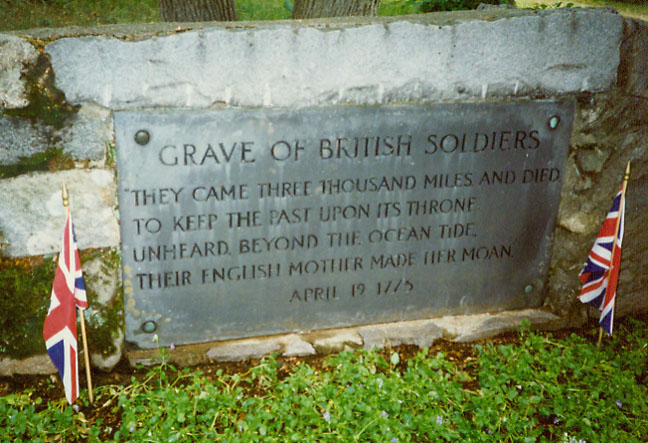
marker at the grave of an English soldier
For decades, Lexington showed modest growth while remaining largely a farming community, providing Boston with much of its produce. It always had a bustling downtown area, which remains so to this day. Lexington began to prosper, helped by its proximity to Boston, and having a rail line (originally the Lexington and West Cambridge Railroad, later the Boston and Maine Railroad) service its citizens and businesses, beginning in 1846. (Today, the Minuteman Bikeway occupies the site of the former rail line.) For many years, East Lexington was considered a separate village from the rest of the town, though it still had the same officers and Town Hall. Most of the farms of Lexington became housing developments by the end of the 1960s.
Text from Wikipedia

Concord
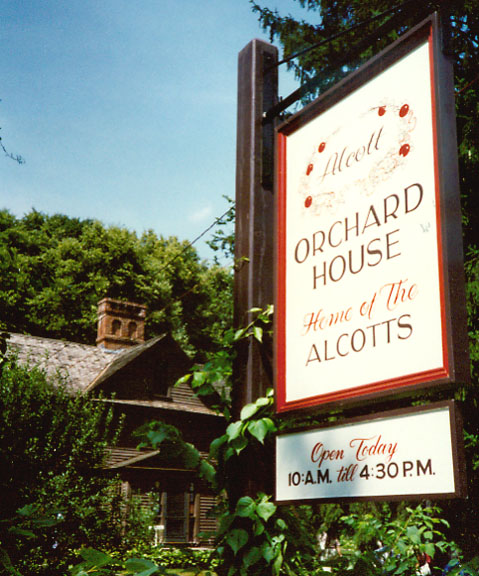
Alcott home
Concord (Massachusetts), town, Middlesex County, eastern Massachusetts, on the Concord River, near Boston; incorporated 1635. It is a residential and industrial center; manufactures include electronic equipment and metal products. Among the points of interest are Minute Man National Historical Park, site of the first military encounter of the American Revolution; The Wayside, home of the writers Amos Bronson Alcott and Nathaniel Hawthorne; and The Old Manse, built in 1770, the boyhood home of the philosopher Ralph Waldo Emerson. Located nearby is Walden Pond, where essayist Henry David Thoreau lived in solitude from 1845 to 1847.
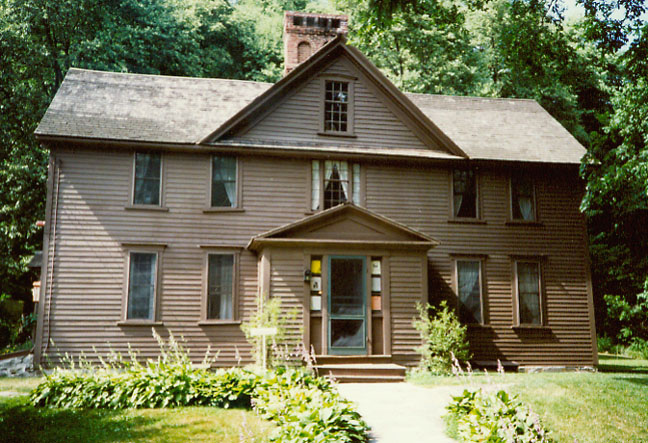
Orchard House
Settled in 1635, the community was named Concord because of the peaceable manner in which the site was acquired from the Native Americans. In 1774 aspects of British colonial rule were protested here at the first county convention of Massachusetts and at the first Massachusetts Provincial Congress, which was presided over by the American statesman John Hancock.
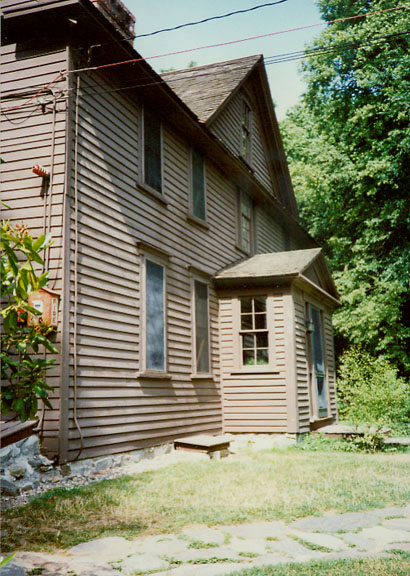
as seen from the rear
On April 19, 1775, the Battle of Concord, a skirmish between British troops and minutemen, began the military phase of the revolutionary era.
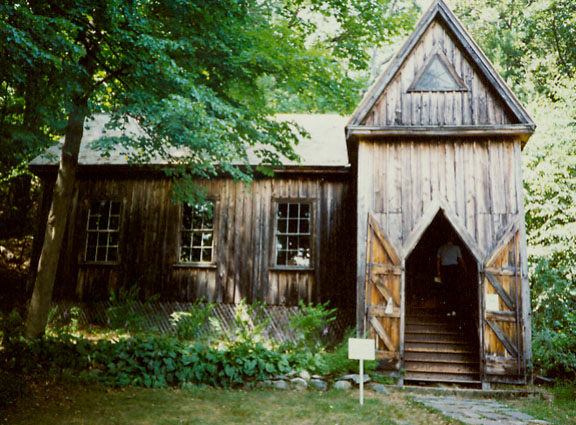
back building
(used as study and meeting room)
Text from Wikipedia
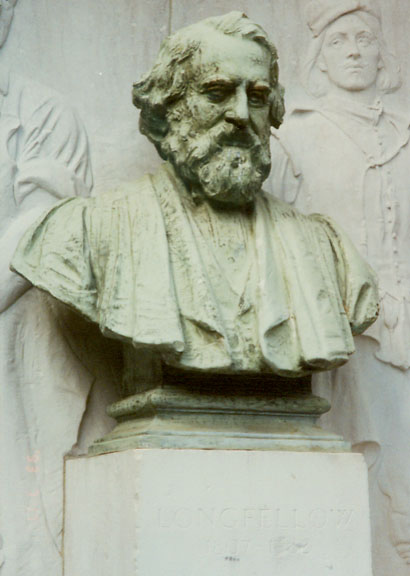
the 19th-century poet Henry Wadsworth Longfellow
Cambridge (Massachusetts), city and a seat (with Lowell) of Middlesex County, northeastern Massachusetts, on the Charles River, opposite Boston. Cambridge is a noted educational and research center; it is the seat of Harvard University (1636), the first college in North America, Massachusetts Institute of Technology (1861), Radcliffe College (1879), and Lesley College (1909). Its printing and publishing industry dates from 1638, when the first printing press in America was established here. Rubber goods, electronic equipment, scientific instruments, candy, and meat products also are manufactured.
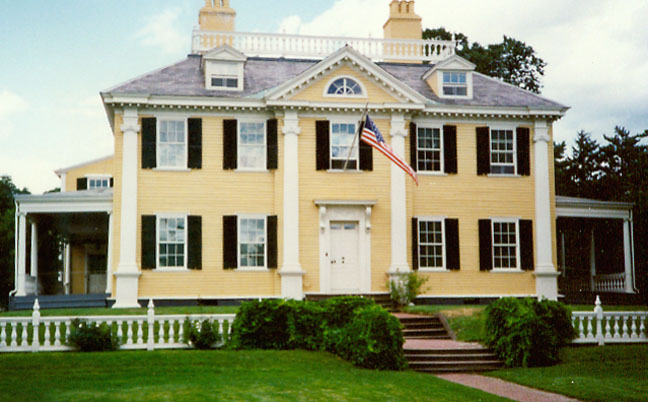
home of the 19th-century poet Henry Wadsworth Longfellow
The city's historic structures include the house George Washington used as headquarters after assuming command of the Continental Army here in 1775; it later became the home of the 19th-century poet Henry Wadsworth Longfellow. Among the many other notable 19th-century people who lived in Cambridge were the author-physician Oliver Wendell Holmes and the poet-diplomat James Russell Lowell.
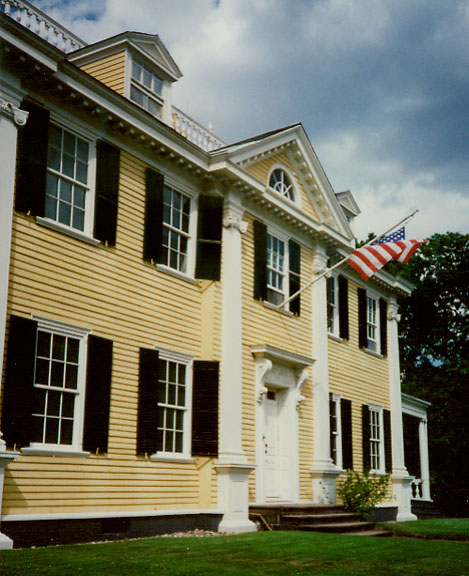
another view of the Longfellow home
Other points of interest are Harvard Square; the eight museums administered by Harvard University, housing one of the finest university art collections in the world; the Schlesinger Library at Radcliffe, specializing in American women's history, and housing papers of Julia Ward Howe, Susan B. Anthony, Harriet Beecher Stowe, Elizabeth Cady Stanton, Amelia Earhart, and others; Christ Church and the Old Burying Ground; and Harvard's Widener Library, which displays a Gutenberg Bible.
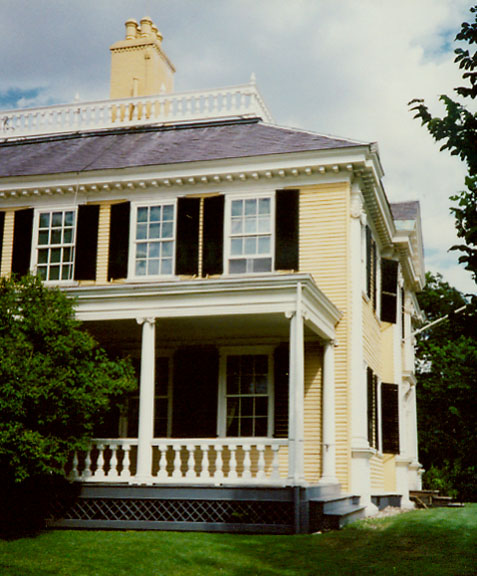
Longfellow home from the rear
Founded as New Towne in 1630, the city was the
capital of Massachusetts Bay Colony until 1634. It was renamed in 1638 for
Cambridge, England, and incorporated as a city in 1846. Completion in 1912 of a
subway connection to Boston facilitated industrial growth. Population 95,322
(1980); 95,802 (1990); 93,352 (1998 estimate).
Text from Microsoft Encarta
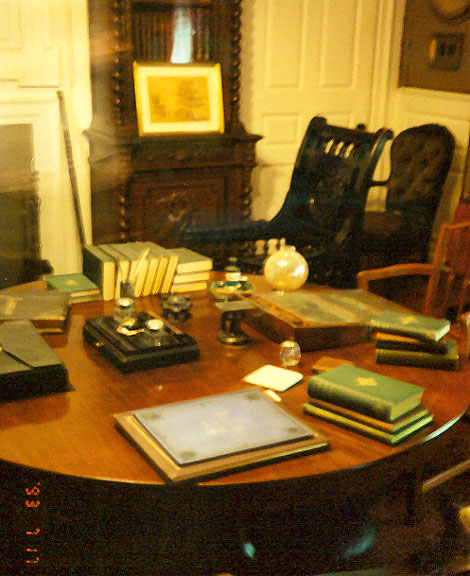
Longfellow's Study
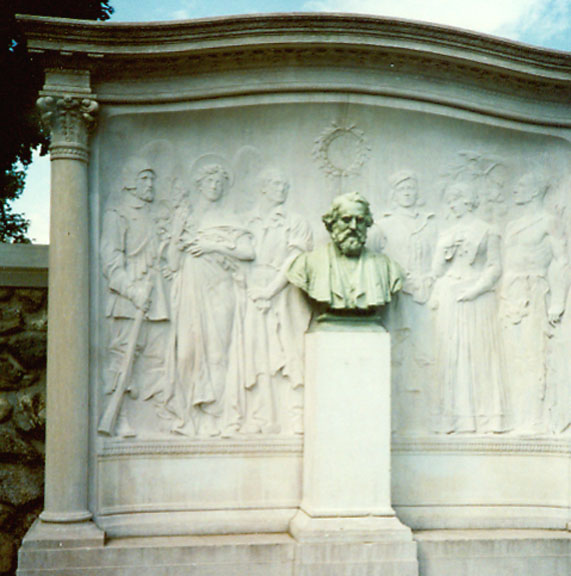
Monument to him in the park across the street along the Charles river
Other stately homes in Cambridge