
































Juneau
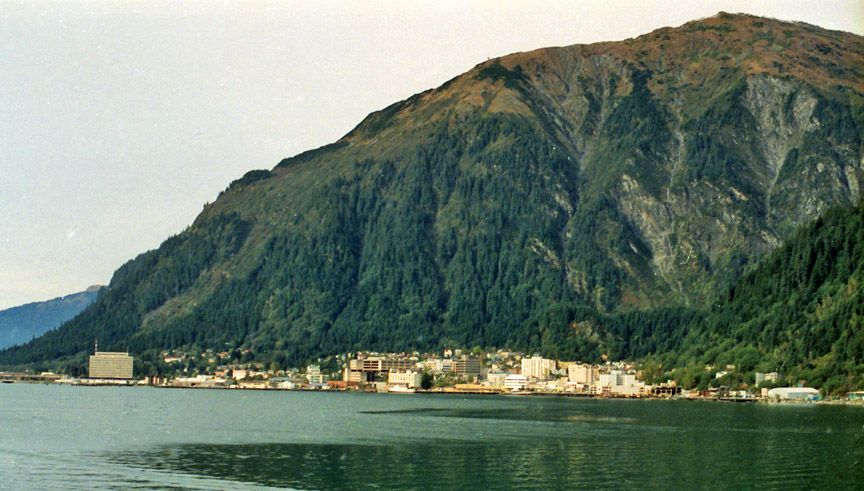
the city between the sea and the mountain
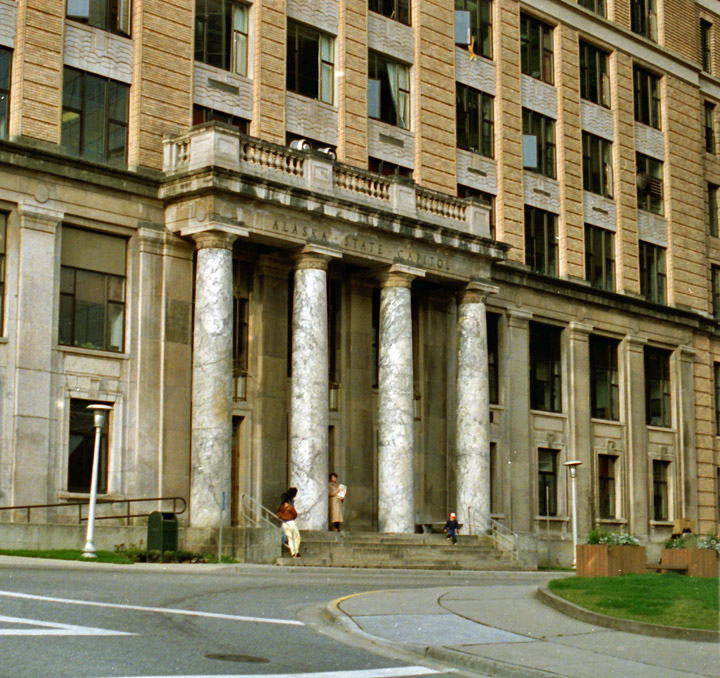
the Alaska state capital building
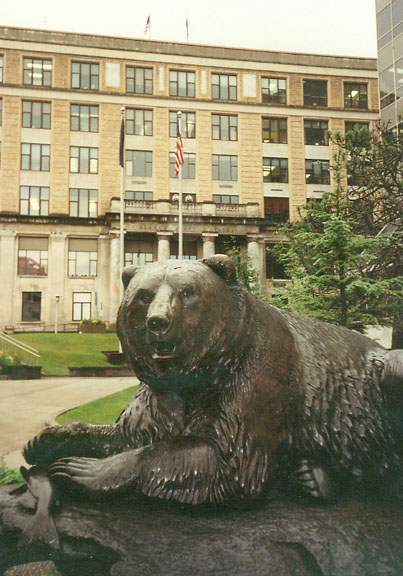
the Bear statue which is in front of the Alaska
courts building
(state capital seen in the background)
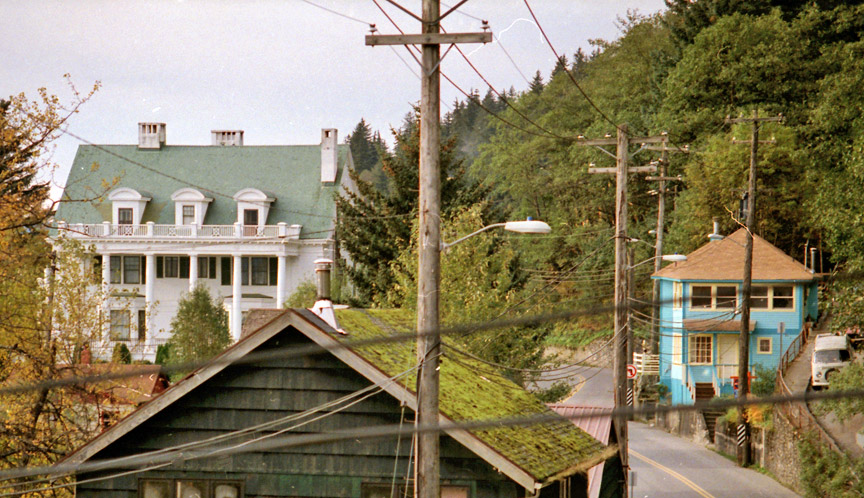
the governor's house in the left background
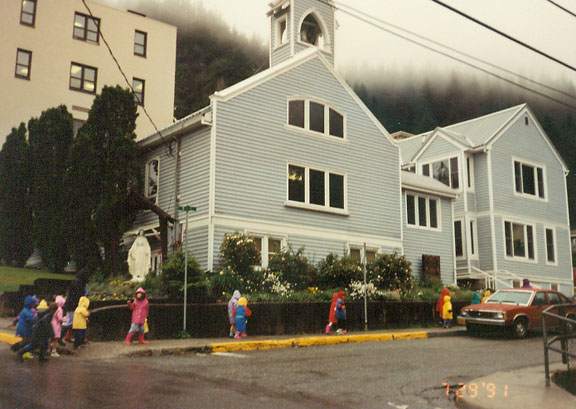
a rainy day in town
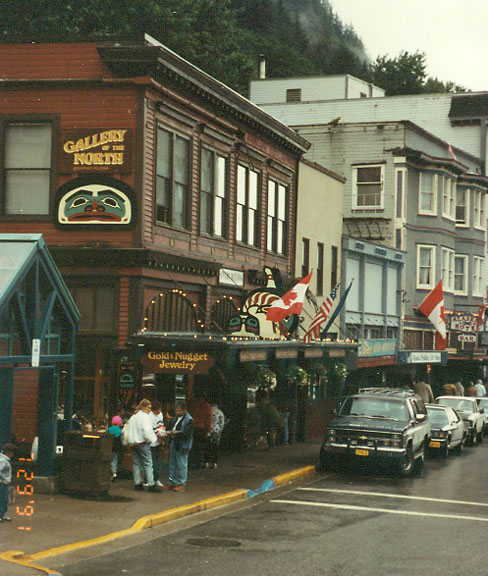
shopping street on a rainy day

Red Dog Saloon
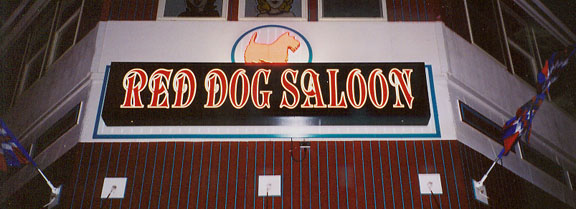
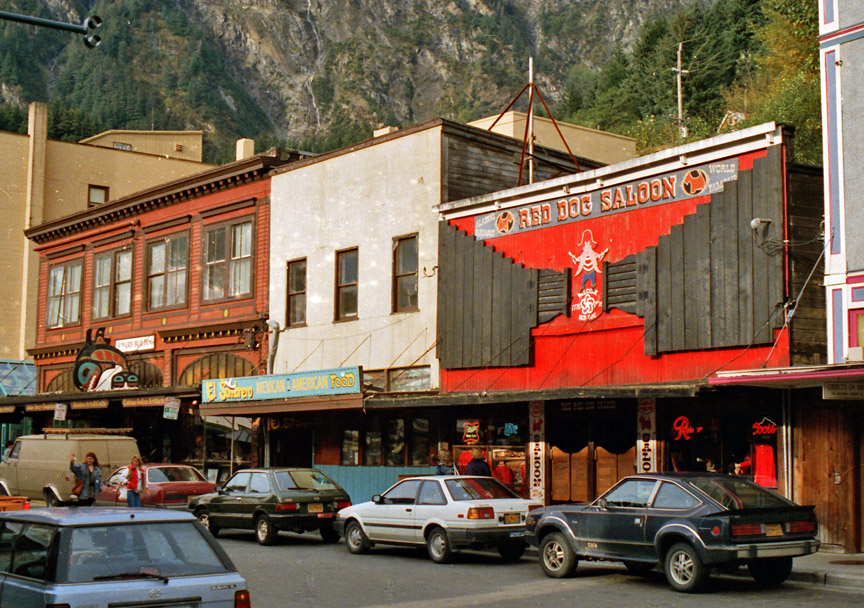
street entrance
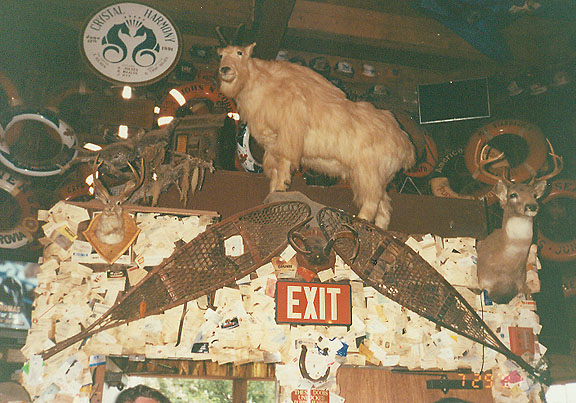
interior
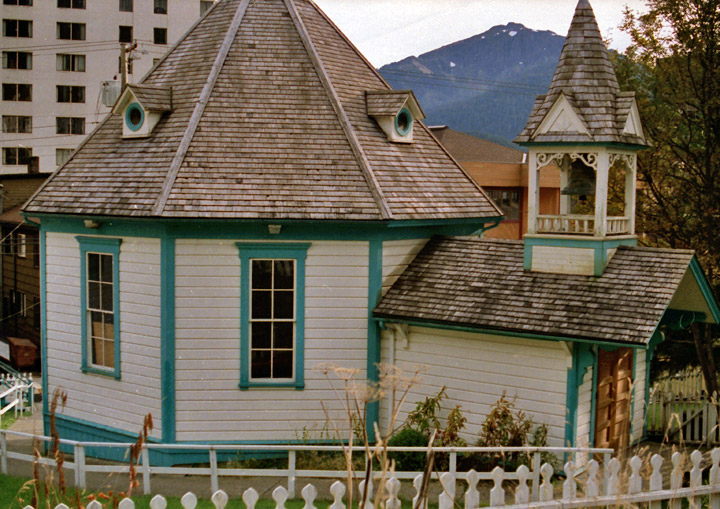
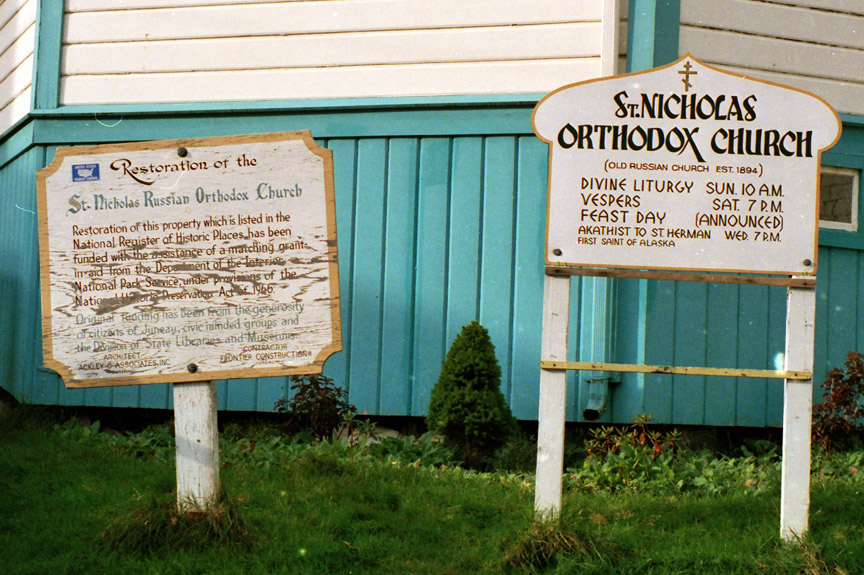
Although this unique octagonal building was constructed with funds donated from Russia, and the six large panels in the front (called the iconostas or icon screen) were painted in Russia, there were no Russians in Juneau, and this has been an Alaska Native, mostly Tlingit Indian, parish since its founding in 1893.
Sitka was the capital of Russian America, and there were two churches: the Cathedral where Russians, Siberians and Aleuts worshipped, and a Tlingit church near the native village. The city of Juneau did not exist during the Russian era, which ended in 1867. Most of Alaska’s 87 Orthodox churches were founded by Aleuts or Aleut missionaries, but no Aleut or Russian missionaries came to Juneau
It was the Tlingit Chiefs in the Juneau area who took the initiative, inviting the Orthodox bishop in Sitka to visit, instruct and baptize them about a hundred years ago. After Juneau’s founding as a Gold Rush town, American missionaries introduced Protestant Christianity in the region, but, following government policies of the time, refused to allow the use of Tlingit language in the services or schools. Since the Indians were still the great majority of the population, they saw no reason to adopt the new, “foreign” language and customs of the newcomers, and asked to be received into the Eastern Orthodox
Church, knowing this religion had been using the Tlingit language for fifty years or longer at Sitka.
The Iconostas, together with a few Icons on the walls, tell this story:
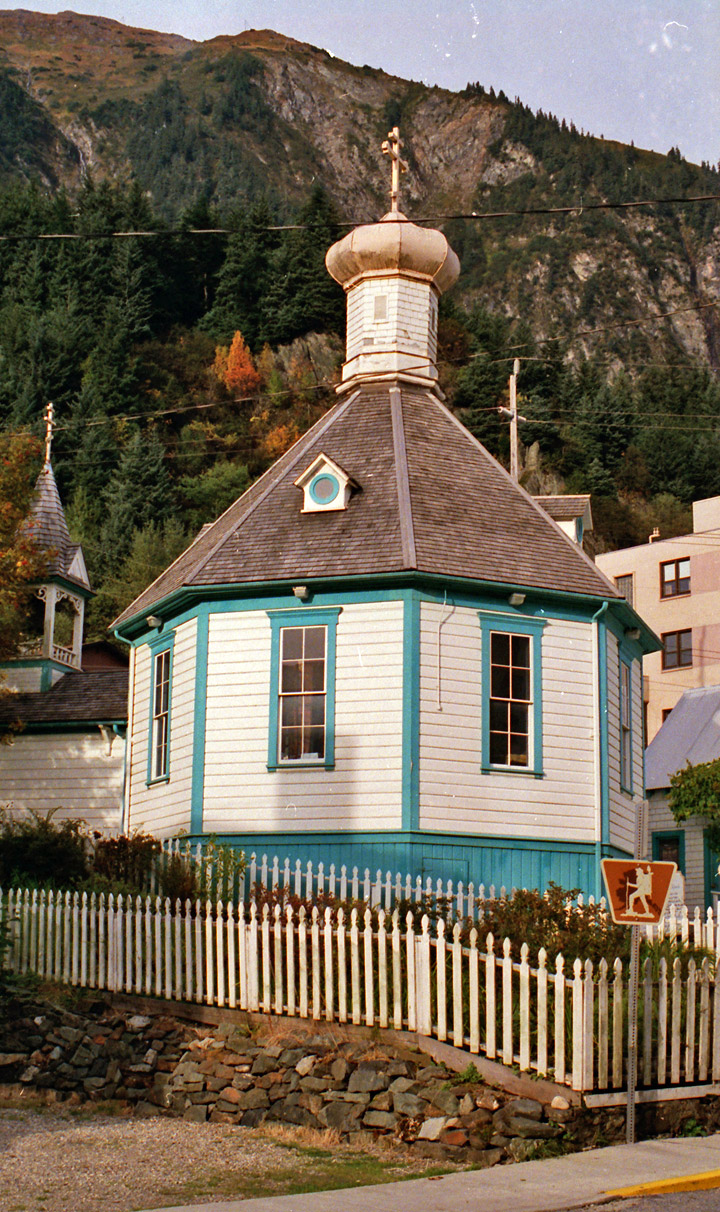
This Church was named for St. Nicholas of Myra in Lycia, a city
in what is now western Turkey. While considering being baptized, several Tlingit
chiefs had a dream in which a short, bald, white-bearded man appeared to them
and told them to go to Sitka and be instructed. When they met the Orthodox
Bishop there, they also saw in the church an icon of St. Nicholas, a fourth
century bishop, whom they all recognized as the man in their dream, and this
church was named for him. His Icon is on the far right side of the icon screen.een.
There is a modern Icon, painted in the ancient style, of St. Nicholas, written
in Slavonic, English and Tlingit on the right side of the church, under the
lamp. There are about 75 Orthodox families in the Juneau area, most of them
Tlingit. Services in this church, held about four times a week, are now
conducted primarily in English, with some Tlingit, Eskimo and Slavonic, as
befits the history of this community.
Mendenhall Glacier
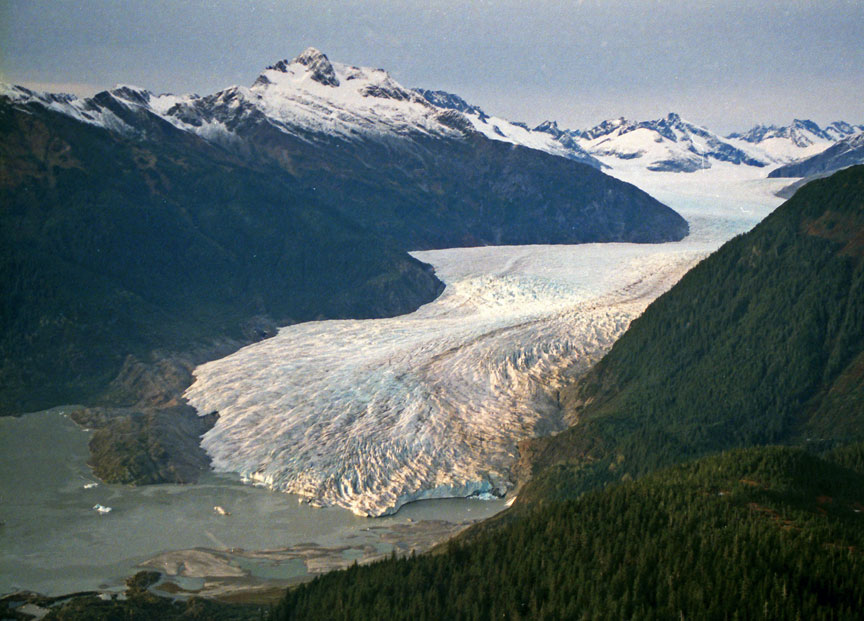
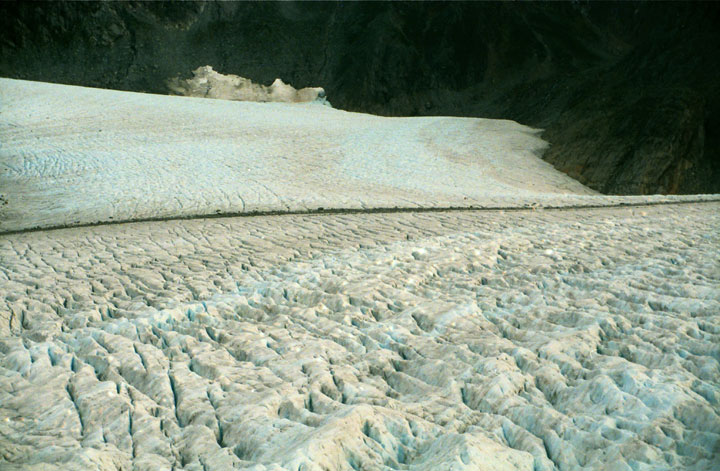
flying over the glacierer
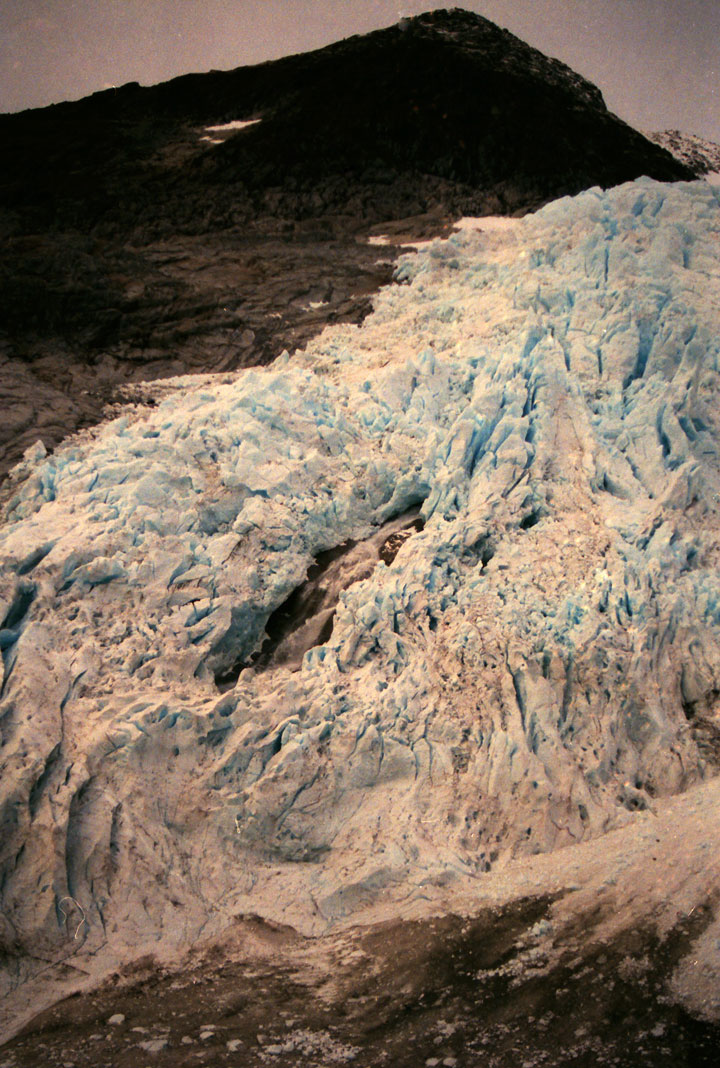
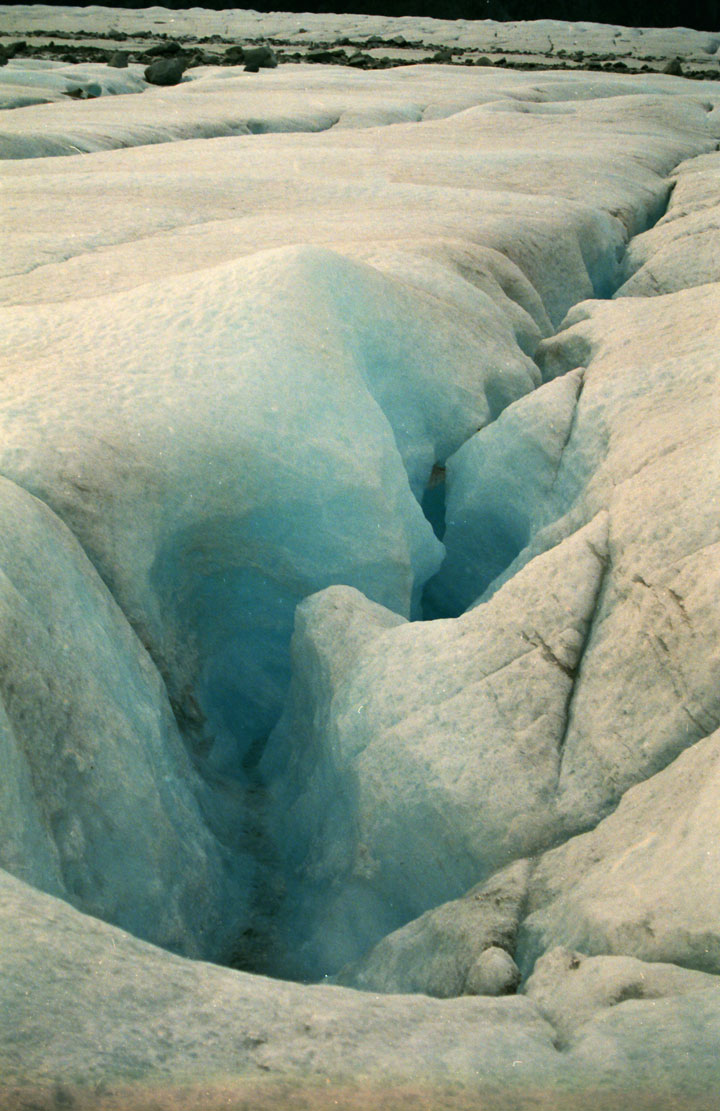
a crevasse
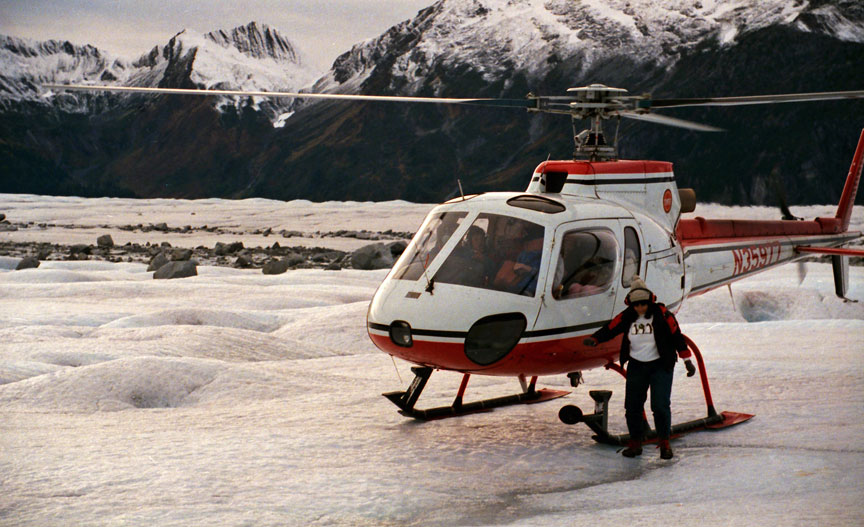
being retrieved by the helicopter
after spending an hour on the glacier
More Photos of the Mendenhall Glacier